
Ever get home after a run or a long day on your feet, kick off your sneakers, and just feel instant relief?
That throb in your arches and the pinched feeling in your pinky toes aren't signs of a good workout. They're signs that your shoes are working against your feet.
For decades, running shoe companies told us we needed thicker foam, stiffer plastic arch supports, and narrow, pointed toes. But a lot of women are realizing that adding more padding doesn't fix foot pain, it often causes it.
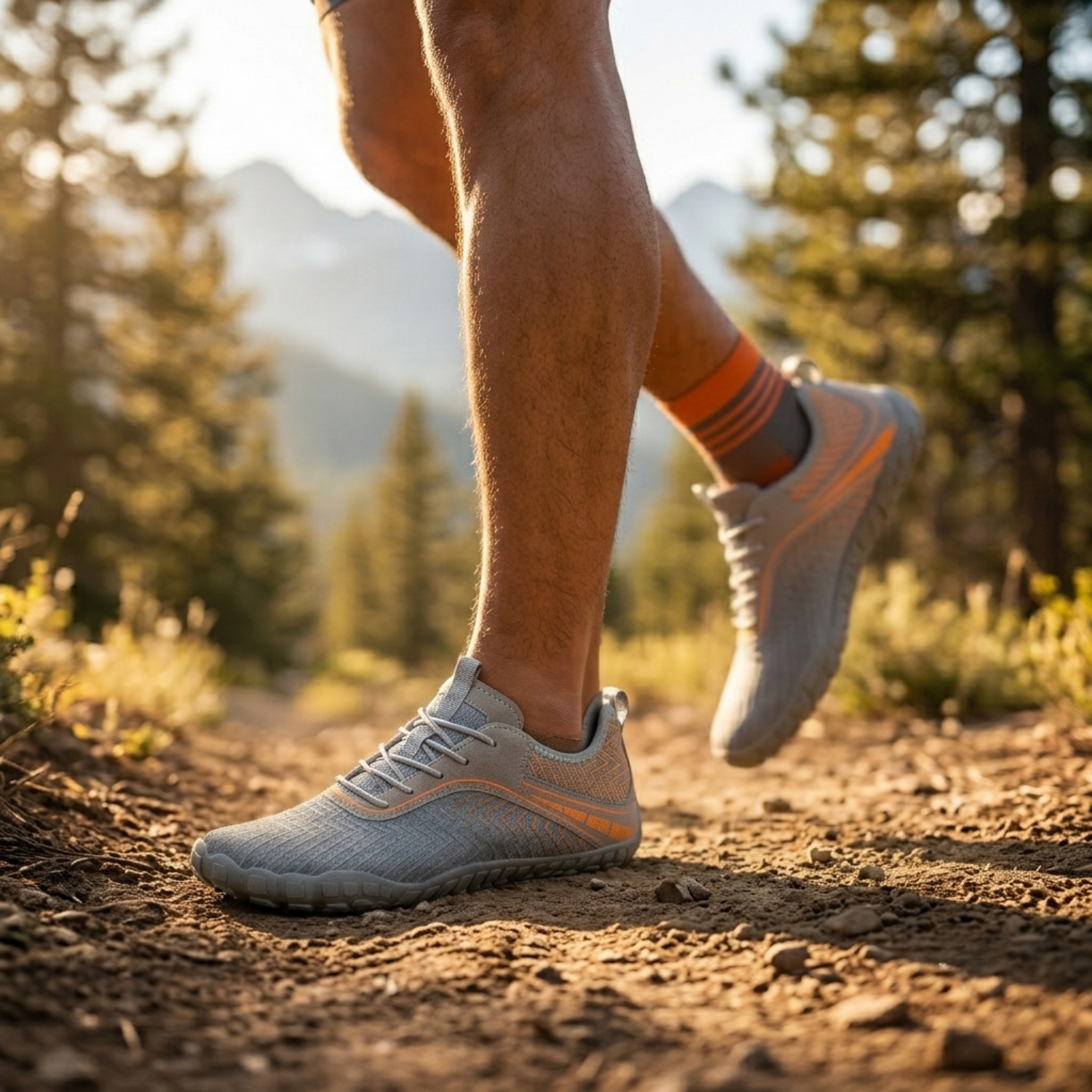
That’s why so many runners are switching to women's minimalist running shoes. The idea is straightforward: give your feet the freedom to bend, spread, and absorb impact the way nature designed them to.
If you’re thinking about making the jump to minimalist footwear, here is a practical guide on getting the fit right, staying comfortable, and picking a pair that actually lasts.
What Makes Minimalist Shoes Different?
If you line up a traditional running shoe next to a minimalist pair, the differences pop out immediately.
Traditional sneakers usually have an 8 to 12-millimeter drop from heel to toe. That elevated heel constantly tilts your weight forward, throwing off your posture and putting extra strain on your lower back and knees. They also taper at the front, squeezing your toes together into a tight wedge.
A good pair of women’s minimalist running shoes flips that script completely with three core features:
-
A Wide, Foot-Shaped Toe Box: Your toes need room to spread out or splay, every time your foot hits the ground. ThThe spread at gives you a natural wide tripod under your foot, providing instant stability when running or landing jumps.
-
Zero Heel Elevation (Zero-Drop): The sole is flat from heel to toe. This keeps your posture neutral, aligns your hips, and lets your Achilles tendon stretch and flex naturally.
-
High Flexibility and Ground Feel: A thin, flexible sole lets your feet bend naturally through your entire stride. It also wakes up thousands of nerve endings on the bottom of your feet, letting your brain react to the ground in real time.
How to Get the Right Fit (It's Not Like Standard Shoes)
Sizing minimalist shoes throws a lot of people off because we’re so used to tight, snug sneakers.
When trying on minimalist running shoes, throw out the idea that a shoe should wrap tightly around your toes. You want about a thumb's width of empty space between your longest toe and the front of the shoe. When you stand up, your toes should be able to wiggle and splay out completely without pressing against the sides or front edge.
As long as the heel fits securely without slipping, that extra room in the front is exactly what you want. It gives your foot space to expand naturally when landing impact.
Real-World Durability: The Andune Advantage
Here’s a common issue women face when buying minimalist running footwear: finding a pair that handles real-world roads.
A lot of imported global brands charge high prices for delicate minimalist shoes designed almost exclusively for smooth, indoor gym floors. Take them out on rough concrete sidewalks, asphalt roads, or gravel trails, and those thin outsoles wear down in just a few months.
This is where a brand like Andune makes a huge difference.
Andune designs women's minimalist running shoes specifically built for tough, everyday surfaces. Models like their Ultra Light series give you an ultra-thin sole, zero-drop platform, and breathable knit upper for daily road runs and gym sessions, while their All Terrain options feature rugged, high-traction outsoles for outdoor trails and hikes.
Their outsoles give you an equally good grip on treks and uneven pavement as bulky hiking shoes do, but without dragging around extra weight. Best of all, because they're made for real-world use, Andune delivers authentic ground feel and long-lasting durability at a far lower price point than imported alternatives.
Transitioning Without Sore Calves
If you’ve spent years in heavily padded sneakers, treat your switch to minimalist running like starting a new strength program. Your foot arches and calf muscles have been resting inside a foam "cast" for years, so they need time to wake up.
-
Weeks 1 & 2: Wear your new shoes around the house, for short daily walks, or during light gym warm-ups. Let your feet get used to being flat.
-
Weeks 3 & 4: Wear them for full strength-training workouts or 20-minute neighborhood walks. You'll notice your balance getting noticeably better as your toes grip the floor naturally.
-
Month 2 and beyond: Begin incorporating short 5- to 10-minute runs, emphasizing light midfoot landings instead of pounding the heel to the ground. Gradually build up your mileage as your calves adapt.
The Bottom Line
Switching to natural footwear isn't about following a temporary fitness trend. It's about respecting how your body was built to move.
When you ditch pointed toe boxes and thick foam heels, you stop fighting against your own biology. Give your toes room to spread out, choose shoes that bend naturally with your stride, and enjoy moving with complete freedom every single day.
Frequently Asked Questions
1. Can I use women's minimalist running shoes for gym workouts and HIIT classes?
Yes, absolutely. Because women's minimalist running shoes have flat, un-cushioned soles, they prevent energy leaks during heavy squats, deadlifts, and box jumps. They give you a much firmer, more stable base than squishy running sneakers.
2. Are zero-drop running shoes safe if I run mostly on hard concrete roads?
They are safe, but you need an adjustment period. Minimalist shoes naturally shift your strike from landing hard on your heel to a lighter midfoot landing, which cuts down joint impact. Start with short runs on pavement and slowly increase your distance as your foot muscles build strength.
3. Why are Andune minimalist running shoes better for outdoor wear than imported brands?
Many imported barefoot brands use soft rubber soles meant only for smooth indoor studio floors. Andune designs shoes with durable, high-grip outsoles that withstand rough asphalt, gravel, and outdoor paths without wearing down quickly or costing a fortune.
4. How do I know if I have adapted to minimalist shoes?
You’ll notice your foot arches feeling stronger, your ankles feeling sturdier, and zero calf tightness after your runs. Once you can walk and run comfortably without thinking about your footing, your feet have successfully adapted.