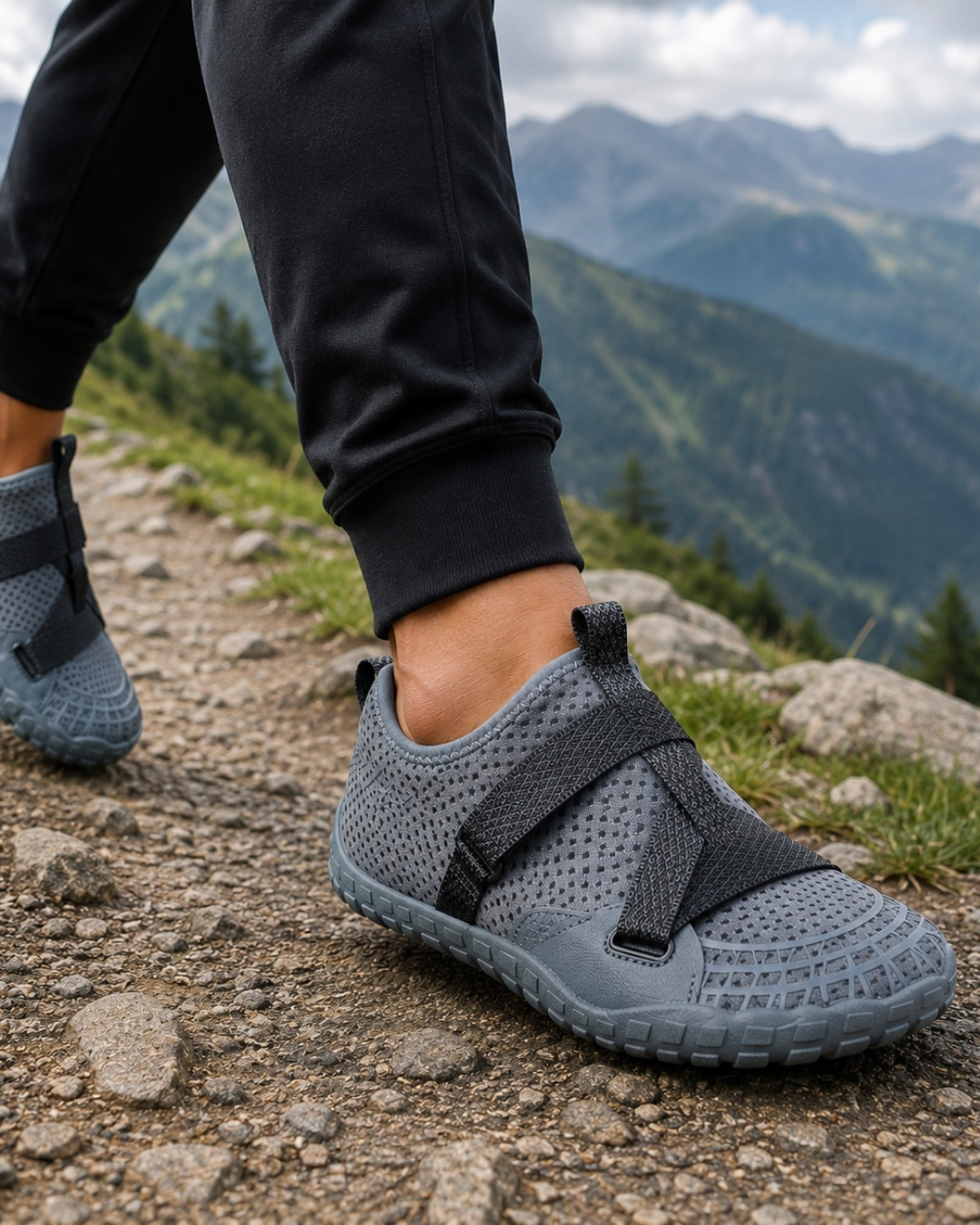

If your workout looks different every single day, maybe squats on Monday, a HIIT circuit on Wednesday, and a quick trail run on Friday, then you’ve probably felt the frustration of wearing the wrong shoes. Most of us grew up wearing "all-purpose" sneakers, but in reality, a shoe built for only moving forward (like a runner) is actually a liability when you're trying to move in every other direction.
This is where men's cross training shoes come into play. But we aren’t talking about those chunky, over-padded trainers from ten years ago. We’re talking about a new era of functional footwear that actually respects how your body moves.
What Actually Is a Cross Trainer?
In the simplest terms, a cross trainer is a hybrid. It’s designed to give you the stability of a lifting shoe, the lateral support of a tennis shoe, and the flexibility of a runner.
Traditional running shoes are designed for one thing: linear motion. They have high, squishy heels that act like sponges. That’s great for a jog, but it’s a disaster for a heavy squat or a lateral lunge. When you’re under a barbell, you want a firm, stable connection to the floor, not a marshmallow sole that wobbles under pressure
Why "Barefoot" is the Secret to Better Training
The biggest shift in the fitness community lately is the move toward barefoot shoes for training. You might wonder why you’d want "less" shoes when you’re doing "more" work, but the benefits are purely mechanical:
-
Direct Power Transfer: When you wear barefoot running shoes or minimalist trainers in the gym, there is no "energy leak." Every ounce of force you push into the floor goes directly into your lift rather than being absorbed by a thick rubber sole.
-
Unmatched Stability: Most men's cross training shoes in the minimalist category feature a "zero-drop" platform. This means your heel and forefoot are at the same level, putting your spine and hips in their natural, neutral alignment. This is vital for maintaining form and preventing lower back strain during compound movements.
-
The Sensory Advantage: Your feet are packed with thousands of nerve endings. Traditional padded shoes mute that feedback. Switching to barefoot shoes lets your brain "feel" the ground, which instantly improves your balance and coordination during complex movements like box jumps or agility drills.
One Shoe, Multiple Terrains
The beauty of a high-quality minimalist cross trainer is its versatility. Because they are lightweight and have a low profile, they are much cheaper and easier to pack than carrying three different pairs of shoes to the gym.
In India, where we often jump from a concrete gym floor to an outdoor park or even an undulating trail, you need a sole that can adapt. Brands like Andune offer an equally good grip on treks and gym floors because their soles are designed to be flexible. Instead of fighting against a rigid shoe, your foot moves with grace and strength, naturally adjusting to whatever surface is beneath you.
Strengthening While You Work Out
Perhaps the best part about using barefoot running shoes as your primary trainers is the "passive" workout. While you're focusing on your chest or back, the 29 muscles in your feet are also getting a workout. By ditching artificial arch support, you allow your foot to function as a natural shock absorber. Over time, this builds a foundation that is resistant to common injuries like plantar fasciitis or rolled ankles.
How to Pick the Right Pair
When looking for the best men's cross training shoes, look for these three non-negotiables:
-
Wide Toe Box: Your toes need room to "splay" (spread out) to create a wide base for balance.
-
Flexible Sole: You should be able to bend the shoe easily; this ensures unrestricted movements during lunges and stretches.
-
Zero Drop: Ensure the heel isn't elevated so your posture stays perfect.
The Bottom Line
You wouldn't wear a tuxedo to go for a swim, so why wear a running shoe to lift weights? Investing in a solid pair of minimalist cross trainers is about more than just a trend; it’s about unlocking your body’s natural potential. When you strip away the fluff, you’re left with the strength and ease that comes from moving exactly the way nature intended.
FAQs
1. Can I use my barefoot running shoes for heavy weightlifting?
Absolutely. In fact, many professional lifters prefer barefoot shoes over traditional trainers. Because there is no squishy foam between you and the floor, you get a much more stable base for squats and deadlifts. This direct contact ensures there is no "energy leak," allowing you to transfer maximum power from your legs into the ground.
2. What makes men's cross-training shoes different from standard gym sneakers?
Standard sneakers are often designed only for forward motion and have high heel-to-toe drops. Men's cross training shoes, especially in the minimalist category, are built for lateral (side-to-side) stability and unrestricted movements. They allow your foot to flex and react quickly during HIIT sessions or agility drills, which prevents the foot from feeling "trapped" in a rigid structure.
3. Do barefoot shoes provide enough protection for high-impact jumps?
While they don't have thick padding, barefoot running shoes encourage you to land on your midfoot or forefoot rather than your heel. This engages your calves and arches as natural shock absorbers. By awakening your feet’s sensory connection to the ground, you naturally learn to land softer and with more grace, which is often better for your long-term joint health than relying on artificial foam.
4. Can I wear my cross trainers for outdoor activities or light treks?
Yes. High-quality minimalist trainers are much cheaper than buying multiple specialized shoes and offer an equally good grip on treks. Because the soles are flexible, they help you maintain balance on undulating surfaces where a stiff, traditional trainer might cause you to slip or trip.