
Walk into any modern gym on a Monday evening, and you’ll see guys attempting high-intensity workouts in footwear that actively works against them.
One guy is trying to squat heavy in ultra-cushioned running shoes, his heels sinking into squishy foam like he’s standing on a mattress. Another is doing explosive box jumps in flat, rigid lifestyle sneakers with zero flexibility.
If you’ve ever felt unstable during a kettlebell swing, slipped during a lateral shuffle, or finished a HIIT class with aching lower back muscles, your footwear is likely the culprit.
Cross-training isn't a single movement—it’s a chaotic mix of lifting, sprinting, jumping, and pivoting. Using basic running shoes or casual sneakers for multi-directional functional fitness is a fast track to wasted energy and joint strain.
Here is how to cut through the marketing noise and pick the right pair of "men's cross training shoes" for your routine.
Why Standard Sneakers Fail in Functional Workouts
To choose the right pair, you first need to understand why generic sneakers fail under pressure.
1. The Squish Factor: Running shoes are engineered for forward-moving cardio. They feature thick, compressed foam heels designed to absorb landing impact. When you try to deadlift or squat on that foam, the energy leaks sideways, forcing your ankles to wobble and throwing your knees out of alignment.
2. The Narrow Wedge: Most athletic shoes narrow at the front, forcing your toes into a small triangle. It takes away the natural tripod base of the foot, which will hurt your balance in heavy compound lifts or lateral agility drills.
3. Elevated Heel Drops: Steep heel-to-toe drops tilt your pelvis forward. While that incline might push you forward on a treadmill, it stresses your lower back during squats and lunges.
The Non-negotiables of a Great Cross Trainer
When you’re evaluating “men’s cross training shoes” for gym work, HIIT or functional training, look for these key features:
1. Flat, Zero-Drop Base for Grounded Lifting
Look for a shoe that keeps your heel and forefoot perfectly level with the ground. A zero-drop platform naturally aligns your spine and hips, so you can drive force straight into the ground during deadlifts, overhead presses and squats without leaning forward.
2. Wide Anatomical Toe Box for Balance
When you put weight on your toes, they are supposed to spread or “splay”. The wide toe box gives your feet ample room to spread out each time you land a box jump or dig your foot into the floor for a heavy lift, creating an instant, stable base of support.
3. Torsion Flexibility with Lateral Traction
A rigid sole limits natural foot engagement. You need a flexible sole that bends through burpees and calf raises, combined with a sticky, low-profile rubber tread that grips the floor during rapid lateral shuffles, mountain climbers, or outdoor sled pushes.
4. Lightweight, abrasion resistant uppers
Heavy synthetic panels or thick leather add unwanted bulk and trap heat. Opt for breathable mesh or knit uppers that allow air to flow during intense HIIT circuits and flex naturally with your foot.
Performance Built for Real Life: The Andune Advantage
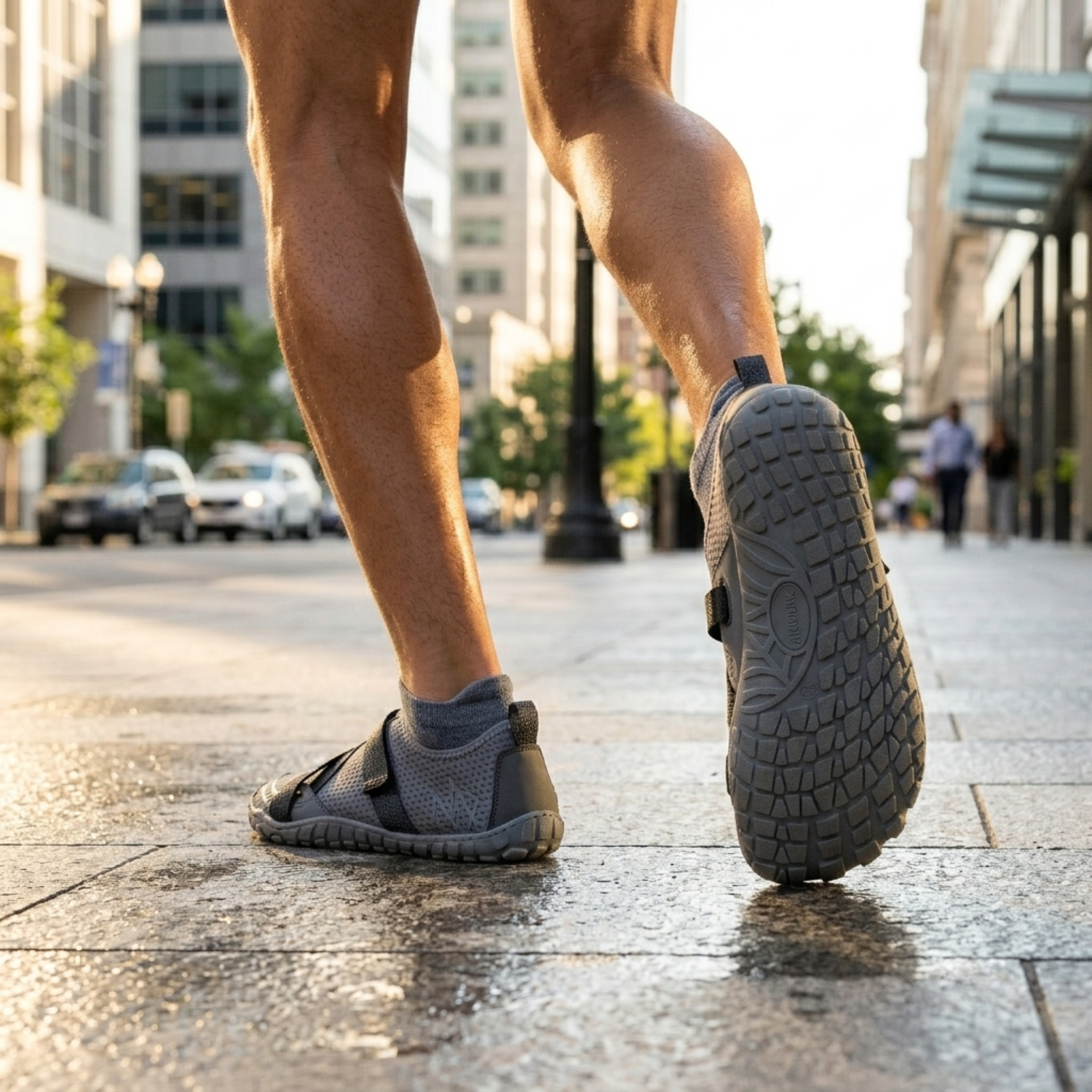
One common issue men run into when searching for minimalist cross trainers is finding a pair that handles varied environments. A lot of global barefoot brands make delicate shoes built purely for polished wooden gym floors. Take them out on concrete pavements, turf, or dirt trails, and the soles wear out prematurely.
This is where Andune steps up.
Designed specifically to bridge the gap between foot health and real-world durability, Andune crafts minimalist cross trainers that respect natural biomechanics while handling tough terrain.
Check out their “Ultra Light” line. It features an ultra-thin sole, zero-drop platform and roomy toe box so you can feel the floor and engage your foot muscles during heavy lifts and indoor HIIT workouts.
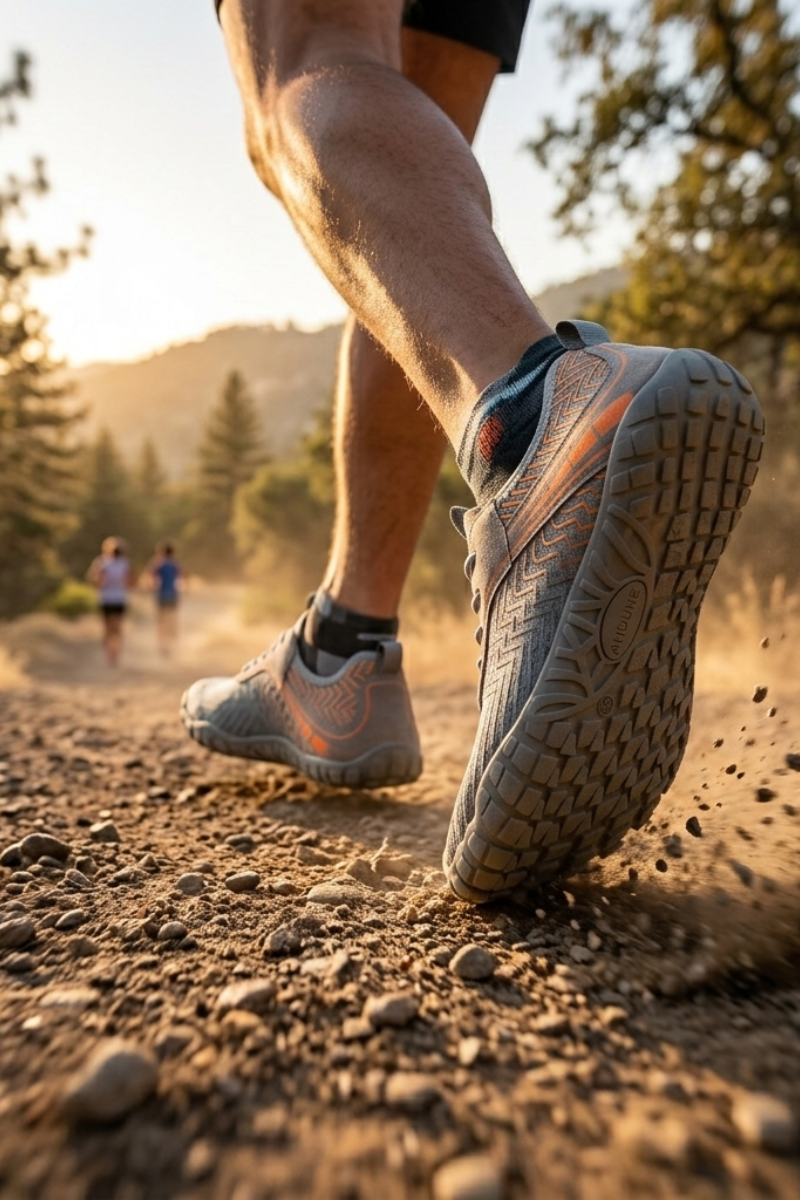
If your functional training takes you outside onto grass, gravel, or rough outdoor circuits, their "All Terrain" models feature rugged, high-traction outsoles. They give you an equally good grip on treks and uneven outdoor surfaces as bulky boots do, but without the restrictive weight or rigid frames.
Plus, because they are designed locally, Andune delivers high-end barefoot performance at a far more accessible price point than imported global alternatives.
How to Match Your Shoe to Your Primary Workout
Heavy Strength & Powerlifting- Zero-drop sole, zero foam compressability, ultra-wide toe box for floor grip.
HIIT & Plyometrics- Lightweight, high outsole flexibility, breathable uppers, secure midfoot lock.
Outdoor Functional Circuits- Durable rubber tread, flexible outsole, abrasion-resistant materials.
Making the Switch
If you’re used to training in heavily cushioned sneakers, treat your new minimalist cross trainers like a new training stimulus. Your feet have 29 muscles that have been resting inside cushioned "casts" for years.
Start by wearing your new "men's cross training shoes" for light gym sessions, bodyweight warm-ups, or short workouts. Over 3 to 4 weeks, your foot arches, calves, and ankles will build natural strength.
When you stop fighting your footwear and let your feet work naturally, your stability improves, your power transfer cleans up, and your workouts feel noticeably more fluid.
FAQs
1. Can I use my men's cross training shoes for long distance running on road pavement?
While minimalist cross trainers are fantastic for short cardio sprints, shuttle runs, and agility drills in HIIT classes, they aren't meant for long-distance pavement pounding if you haven't adapted. For multi-mile road runs, build your foot strength gradually before taking zero-drop shoes on long asphalt routes.
2. Are zero-drop men's cross training shoes safe for heavy barbell squats?
Yes, they are often preferred by powerlifters and strength coaches over cushioned running shoes. The flat zero-drop base prevents your foot from tilting forward, letting you drive power straight through your heels and midfoot with zero compression or wobbling.
3. Why are Andune cross trainers better suited for Indian gym-goers than imported brands?
Many imported barefoot brands are priced high and use soft rubber outsoles meant only for indoor studio floors. Andune designs versatile cross trainers with durable, high-grip soles built for local gym floors, outdoor turf, and rough roads at a much fairer price point.
4. How do I know if my cross training shoes have enough toe room?
When you put the shoe on and stand up, your toes shouldn't feel pressed against the front or sides. You should be able to wiggle and splay your toes comfortably, creating a firm, wide base against the insole.